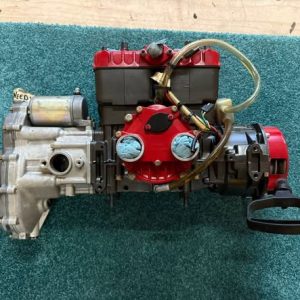
The Rotax 582 “Blue Head” RAVE Engine – Built by Rotax Rick provides a commercially attractive engine option for buyers seeking lightweight aviation power with a documented builder, verified configuration, and suitable supporting components.
A Rotax 582 Blue Head may also be marketed as a Rotax 582 Blue Head RAVE Engine or Rotax 582 Aircraft Engine when its cylinder-head design, power-valve system, accessories, and build history are verified.
The Rotax 582 65HP Engine designation communicates its general power class, but actual output and operating condition depend on configuration, maintenance, tuning, and test results.
A Liquid-Cooled Aircraft Engine depends on a complete radiator, hoses, coolant system, pump, and suitable airflow installation.
A Rotax Aviation Engine should be selected through technical evaluation rather than brand recognition alone.
Why Exact Engine Identification Matters
A blue-colored cylinder head should not be treated as complete proof of the engine’s internal specification, build status, or RAVE configuration.
The final configuration should remain connected with the exact engine serial number.
Documenting the Engine Build Process
Buyers should request invoices, build sheets, photographs, test results, correspondence, and any maintenance recommendations supplied with the engine.
The engine should be evaluated according to its documented work rather than the reputation of the builder alone.
Inspecting the RAVE Components
The presence of external RAVE housings does not independently prove that the complete system operates correctly.
RAVE-system condition should be included in maintenance and pre-purchase records.
Understanding Rotax 582 Two-Stroke Power
Fuel quality, oil selection, mixture preparation, and oil-injection configuration should be confirmed for the exact installation.
Professional preparation supports responsible use of the Rotax 582 Aviation Engine.
Inspecting Radiator and Coolant Components
Complete cooling-system inspection supports more reliable engine operation.
Temperature indications should be verified through reliable instruments rather than estimated through engine sound or appearance.
Inspecting Cylinders, Pistons, and Crankcase
Both cylinders should be evaluated because uneven compression, mixture, cooling, ignition, or wear read more can affect the complete engine.
Internal clearances and component measurements should be recorded during a documented build.
Dual Carburetor Fuel Delivery
Complete carburetor preparation supports smoother Rotax 582 engine operation.
Fuel filters, pumps, lines, vents, tanks, and shutoff systems also influence dependable fuel delivery.
Dual Ignition and Electrical Components
A dual-ignition configuration can provide two ignition paths when the installed components and wiring operate correctly.
Ignition checks should be completed through controlled procedures appropriate to the engine and aircraft installation.
Selecting a Compatible Propeller System
The reduction gearbox allows the engine and propeller to operate at different rotational speeds, helping match engine output with a suitable propeller installation.
Professional matching protects the Rotax 582 Aircraft Engine and connected propeller system.
Two-Stroke Expansion Chamber Considerations
The buyer should confirm whether the engine package includes the complete exhaust system.
Previous repairs and modifications should be documented.
Evaluating Installed Engine Weight
Published dry-engine weight should not be confused with complete installed-system weight.
System-level planning protects the value of the Lightweight Aircraft Engine installation.
Selecting an Engine for a Homebuilt Project
The builder should review the aircraft designer’s engine recommendations and installation requirements.
Every custom component should be designed and installed with appropriate clearances, strength, support, and maintainability.
Matching the Engine to a Light Sport Project
The Rotax 582 may power some light sport or sport-aviation aircraft, but this does not make every engine eligible for every aircraft.
A specialist-built engine may offer valuable project potential while still requiring aircraft-specific approval, inspection, testing, and documentation.
Understanding Rotax 582 Operating Records
Calendar time and storage conditions can matter even when operating hours are limited.
Storage after building or removal should also be documented, including preservation and environmental conditions.
Understanding Ground-Run Limitations
Engine runs should be completed using suitable mounting, cooling, fuel, exhaust, propeller-safety, and monitoring procedures.
An unloaded or lightly loaded test may not reveal issues that appear under flight power.
Compression, Leak, and Internal Condition Checks
Comprehensive mechanical evaluation supports informed purchasing.
Professional inspection protects buyers from relying solely on external appearance.
Aircraft Engine Buying Guide
The buyer should obtain enough information for a qualified Rotax engine specialist or experienced aviation mechanic to evaluate the powerplant.
- Determine whether the radiator, exhaust, carburetors, air filters, starter, gearbox, ignition modules, mounts, instruments, manuals, and build records are included.
- Confirm whether the engine has been broken in, operated in flight, stored after assembly, removed after a fault, or sold as an unflown project engine.
- Report freight damage, missing accessories, identification differences, leakage, undisclosed repairs, or documentation discrepancies promptly.
Protecting an Aircraft Engine in Transit
The engine should not shift, tip, or contact the crate during transportation.
During storage, the engine should remain dry, clean, supported, preserved, and protected from moisture, dust, insects, corrosion, chemicals, and uncontrolled handling.
Integrating Fuel, Cooling, and Electrical Systems
Fuel, cooling, oil, ignition, exhaust, throttle, choke, instruments, starter, and electrical systems should be planned as an integrated package.
Fuel lines should remain suitable, supported, filtered, protected, and free from sharp bends or heat damage.
Disciplined commissioning protects the Rotax 582 “Blue Head” RAVE Engine – Built by Rotax Rick.
Maintaining the Rotax 582 Blue Head Engine
Service intervals should reflect the exact engine configuration, operating environment, fuel, oil, calendar time, and suitable technical recommendations.
Operating data such as temperatures, engine speed, fuel consumption, plug condition, and ignition-check behavior can help identify developing concerns.
Rotax 582 Price and Installation Costs
Honest product information strengthens buyer confidence and reduces disputes.
The lowest purchase price may not represent the lowest installed cost when major accessories or records are missing.
Rotax 582 Aircraft Engine Conclusion
The Rotax 582 “Blue Head” RAVE Engine – Built by Rotax Rick can provide valuable replacement, restoration, experimental-aircraft, ultralight, or spare-engine potential when its identity, build scope, condition, and compatibility are verified.
The powerplant should not be judged solely through blue heads, clean paint, a 65HP description, builder recognition, or purchase price.
Whether the product is described as a Liquid-Cooled Aircraft Engine, Two-Cylinder Aircraft Engine, Lightweight Aircraft Engine, or Experimental Aircraft Engine, complete system compatibility remains essential.
With transparent builder history, protected shipping, correct aircraft fitment, controlled testing, and appropriate break-in procedures, the Rotax 582 can support a professional aviation project.